
Radioactive Symbol: Meaning History Uses Safety and Global Recognition
Learn everything about the radioactive symbol including its meaning history design safety applications radiation warning signs and global standards. Complete guide to the radioactive symbol.
Radioactive Symbol: The Universal Warning Sign for Radiation
The radioactive symbol is one of the most recognizable warning signs in the world. Whether displayed on nuclear facilities medical equipment research laboratories or hazardous waste containers this symbol instantly communicates the presence of radioactive materials and potential radiation hazards.
Understanding the radioactive symbol is essential for public safety workplace compliance scientific education and environmental protection. This internationally recognized warning sign helps prevent accidental exposure to dangerous ionizing radiation and ensures that people follow proper safety procedures.
In this comprehensive guide you’ll learn about the radioactive symbol’s meaning history design uses safety standards and its role in modern society.
What Is the Radioactive Symbol?
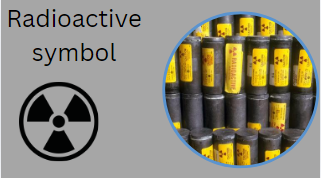
The radioactive symbol often called the radiation warning symbol is a visual warning sign used to indicate the presence of radioactive materials or ionizing radiation.
The symbol typically consists of:
☢
A central circle surrounded by three triangular blades or “trefoils” extending outward.
The symbol warns individuals that radiation may be present and that special precautions are required before entering an area handling equipment or interacting with materials.
Its primary purpose is to:
- Alert people to radiation hazards
- Prevent accidental exposure
- Promote safety compliance
- Support emergency response efforts
- Protect workers and the public
What Does the Radioactive Symbol Mean?
The radioactive symbol communicates a simple but critical message:
“Danger: Radioactive Material or Radiation Present.”
When people see the symbol they should understand that:
- Radiation may be emitted nearby
- Exposure can be harmful
- Safety procedures must be followed
- Protective equipment may be necessary
- Access may be restricted
The exact level of risk depends on the radioactive source but the symbol serves as a universal warning to proceed with caution.
History of the Radioactive Symbol
The radioactive symbol was created in 1946 at the Radiation Laboratory of the University of California Berkeley.
Scientists needed a standardized visual marker that could quickly identify radioactive materials and radiation-producing equipment.
The original design featured:
- A magenta trefoil
- Blue background
- Three-bladed shape
- Central circular core
Over time the design evolved into the now-familiar black trefoil on a yellow background.
The yellow background was selected because:
- It is highly visible
- It contrasts strongly with black
- It attracts attention quickly
- It is commonly associated with caution
Today the symbol is recognized globally as the standard radiation warning sign.
Why Is the Radioactive Symbol Shaped Like a Trefoil?
The radioactive symbol’s distinctive trefoil design was intentionally chosen to create a unique and memorable warning sign.
Several interpretations exist regarding its shape:
- Radiation Emission
The three blades appear to radiate outward from a central source symbolizing energy spreading from radioactive material.
2. Scientific Representation
The design suggests invisible forces extending into the environment.
3. Universal Recognition
The unusual shape minimizes confusion with other industrial symbols.
Regardless of interpretation the trefoil has become synonymous with radiation safety.
Components of the Radioactive Symbol
The radioactive symbol consists of three primary elements.
Central Circle
Represents the radioactive source.
Examples include:
- Uranium
- Plutonium
- Cobalt-60
- Cesium-137
- Radioactive waste
Three Trefoil Blades
Represent radiation spreading outward from the source.
Warning Background
Usually yellow to ensure visibility and hazard recognition.
Together these components create one of the world’s most effective warning signs.
International Standard for the Radioactive Symbol
Several organizations regulate the use of radiation warning signs.
Key organizations include:
- International Atomic Energy Agency
- International Organization for Standardization
- World Health Organization
- United Nations
These organizations establish guidelines regarding:
- Symbol size
- Placement
- Colors
- Safety labeling
- Transportation standards
Consistent standards ensure global recognition.
The New Radiation Danger Symbol
In 2007 the International Atomic Energy Agency introduced an enhanced radiation warning symbol.
This newer symbol includes:
- Traditional trefoil
- Skull and crossbones
- Running person
- Arrow directing people away
The enhanced design helps communicate danger even to people unfamiliar with the traditional radioactive symbol.
Its purpose is to reduce accidental exposure especially in developing regions where radiation literacy may be lower.
Where Is the Radioactive Symbol Used?
The radioactive symbol appears in many industries and environments.
Nuclear Power Plants
Nuclear facilities use radiation warning signs to identify:
- Reactor areas
- Fuel storage
- Waste handling facilities
- Controlled access zones
Examples include facilities using uranium fuel and nuclear reactors.
Hospitals and Medical Facilities
Medical professionals use radioactive materials for:
- Cancer treatment
- Diagnostic imaging
- Nuclear medicine
- Research
Radiation warning signs help protect:
- Patients
- Doctors
- Nurses
- Technicians
Common applications include PET scans and radiation therapy equipment.
Scientific Research Laboratories
Universities and research institutions frequently handle radioactive isotopes.
The symbol identifies:
- Research rooms
- Storage areas
- Experimental equipment
- Sample containers
Industrial Applications
Radiation plays an important role in industry.
Applications include:
- Material testing
- Industrial radiography
- Thickness measurement
- Quality control
The radioactive symbol ensures worker awareness and compliance.
Radioactive Waste Storage
Waste generated from:
- Nuclear energy
- Medical procedures
- Scientific research
must be clearly labeled using radioactive warning signs.
This prevents accidental handling and environmental contamination.
Colors Used in Radioactive Warning Signs
Yellow and Black
Most common combination.
Benefits include:
- High visibility
- Strong contrast
- Easy recognition
Red Radiation Symbols
Some emergency or enhanced warning signs use red elements to emphasize danger.
Magenta Radiation Symbols
Historically used in early radiation laboratories.
Although less common today magenta remains an accepted radiation-warning color in some contexts.
Radioactive Materials Commonly Associated with the Symbol
Several radioactive substances are commonly marked with radiation warning labels.
Uranium
A naturally occurring radioactive element used as nuclear fuel.
Plutonium
Used in nuclear reactors and weapons programs.
Radium
Historically used in medical and industrial applications.
Cesium-137
Used in industrial gauges and medical devices.
Cobalt-60
Widely used in radiation therapy and sterilization.
These materials require strict handling protocols.
Radiation Types Associated With the Radioactive Symbol
The symbol may indicate the presence of various forms of ionizing radiation.
Alpha Radiation
Characteristics:
- Heavy particles
- Limited penetration
- Dangerous if inhaled or ingested
Beta Radiation
Characteristics:
- Faster particles
- Moderate penetration
- Requires shielding
Gamma Radiation
Characteristics:
- High-energy electromagnetic waves
- Significant penetration
- Requires dense shielding materials
Neutron Radiation
Commonly found around nuclear reactors.
Requires specialized protection methods.
Why Radiation Safety Matters
Exposure to high doses of radiation can cause serious health problems.
Potential effects include:
- Radiation sickness
- Burns
- Organ damage
- Cancer
- Genetic mutations
The radioactive symbol serves as the first line of defense against accidental exposure.
Radiation Safety Procedures
When encountering a radioactive warning sign:
Follow Posted Instructions
Always read accompanying safety notices.
Restrict Access
Only authorized personnel should enter controlled radiation areas.
Use Protective Equipment
Examples include:
- Lead aprons
- Dosimeters
- Protective gloves
- Shielding devices
Maintain Distance
Increasing distance from a radiation source significantly reduces exposure.
Limit Exposure Time
The less time spent near a radiation source the lower the radiation dose.
Radioactive Symbol vs Biohazard Symbol
People sometimes confuse the radioactive symbol with the biohazard symbol.
Radioactive Symbol (☢)
Indicates:
- Ionizing radiation
- Radioactive materials
- Nuclear hazards
Biohazard Symbol (☣)
Indicates:
- Biological hazards
- Infectious agents
- Contaminated materials
Both are warning symbols but address entirely different risks.
Radioactive Symbol in Popular Culture
The radioactive symbols has become a cultural icon.
It appears in:
- Movies
- Television shows
- Video games
- Comic books
- Warning labels
- Science fiction media
The symbol often represents:
- Nuclear energy
- Mutation
- Danger
- Scientific experimentation
- Post-apocalyptic themes
Its widespread use has made it one of the most recognizable warning signs on Earth.
Radioactive Symbols and Nuclear Energy
The radioactive symbols is closely linked to nuclear power generation.
Benefits of nuclear energy include:
- Low carbon emissions
- High energy output
- Reliable electricity production
However nuclear operations require strict safety standards making radiation warning signs essential throughout facilities.
Digital Uses of the Radioactive Symbols
The radioactive symbols has also become popular online.
Common uses include:
- Emojis
- Hazard indicators
- Educational content
- Gaming interfaces
- Scientific presentations
Unicode representation:
☢
Unicode Code Point:
U+2622
This allows the symbosl to appear consistently across devices and platforms.
Interesting Facts About the Radioactive Symbol
- Created in 1946.
- Designed at a California research laboratory.
- Recognized worldwide.
- Used in medicine industry research and energy sectors.
- One of the most effective hazard communication symbols ever developed.
- The modern warning system includes additional danger indicators such as skull-and-crossbones graphics.
- Protected by international safety standards.
Frequently Asked Questions (FAQs)
What is the radioactive symbols called?
It is commonly called the radiation warning symbols or radioactive trefoil.
What does the radioactive symbols mean?
It indicates the presence of radioactive materials or ionizing radiation.
Why is the radioactive symbols yellow and black?
Yellow and black provide maximum visibility and hazard recognition.
Who created the radioactive symbol?
It was developed in 1946 at the University of California Berkeley Radiation Laboratory.
Is the radioactive symbols used worldwide?
Yes. It is recognized internationally and regulated by global safety organizations.
Can radioactive materials be safe?
When handled properly under controlled conditions radioactive materials can be used safely in medicine research industry and energy production.
Conclusion
The radioactive symbol is one of humanity’s most important safety signs. Designed to communicate the presence of radioactive materials and radiation hazards instantly it plays a vital role in protecting workers researchers medical professionals and the general public.
From nuclear power plants and hospitals to laboratories and waste storage facilities the radioactive symbols serves as a universal warning that radiation safety procedures must be followed. Its distinctive trefoil design global recognition and strong visual impact make it one of the most effective hazard symbols ever created.
As technology continues to advance and radioactive materials remain essential in medicine industry and energy production the radioactive symbols will continue to stand as a critical safeguard for generations to come.