
Catholic Symbols: Meanings History and Spiritual Significance (Complete SEO Guide)
Introduction to Catholic Symbols
Catholic symbols are visual expressions of faith used by the Catholic Church to represent deep theological truths sacred traditions and spiritual beliefs. These symbols have been used for centuries in churches artwork scriptures architecture and personal devotion.
From the cross to the Holy Eucharist each Catholic symbol carries layers of meaning that connect believers to the life of Jesus Christ the apostles and the broader Christian tradition. Understanding these symbols is essential not only for religious education but also for appreciating Christian art history and culture.
In this SEO-friendly guide we will explore the most important Catholic symbols their origins meanings and significance in modern worship.
Importance of Catholic Symbols in Christianity
Catholic symbols are more than artistic designs. They serve several important roles:
- They teach biblical stories visually
- They strengthen faith and devotion
- They represent sacred mysteries
- They unify believers across cultures
- They preserve Church tradition
The use of symbolism dates back to early Christianity when believers used hidden signs to communicate faith during persecution.
The Holy Cross – The Most Powerful Catholic Symbol
The cross is the central symbol of Catholicism. It represents the crucifixion and resurrection of Jesus Christ which is the foundation of Christian belief.
Meaning of the Cross
- Sacrifice of Jesus
- Salvation and redemption
- Victory over sin and death
Types of Cross Symbols
- Latin Cross – Most common in Catholic churches
- Crucifix – Cross with the body of Christ
- Greek Cross – Equal arms used in early Christianity
The crucifix is especially important in Catholic tradition because it emphasizes Christ’s suffering for humanity.
1 The Crucifix – Symbol of Redemption and Sacrifice
The crucifix is a distinct Catholic symbol showing Jesus on the cross. It reminds believers of Christ’s suffering and love.
Why Catholics Use the Crucifix
- Focus on Christ’s sacrifice
- Reflection on humility and forgiveness
- Spiritual meditation during prayer
It is commonly displayed in churches homes and worn as jewelry.
The Ichthys (Jesus Fish Symbol)
The Ichthys or fish symbol was used by early Christians as a secret sign during Roman persecution.
Meaning of Ichthys
- “Jesus Christ Son of God Savior”
- Symbol of faith and discipleship
- Representation of baptism
Today it is often seen on cars books and Christian merchandise.
The Dove – Symbol of the Holy Spirit
The dove represents the Holy Spirit one of the three persons of the Holy Trinity.
Biblical Meaning
The dove appears during the baptism of Jesus when the Holy Spirit descends like a dove.
Symbolism
- Peace
- Purity
- Divine presence
- Guidance of God
The dove is widely used in Catholic art and baptism ceremonies.
The Sacred Heart of Jesus
The Sacred Heart is a deeply meaningful Catholic devotion symbolizing Jesus’ divine love for humanity.
Key Features
- Heart surrounded by thorns
- Flames representing divine love
- Cross symbolizing sacrifice
Meaning
- Infinite love of Christ
- Compassion and mercy
- Invitation to personal devotion
This symbol is often displayed in Catholic homes and churches.
Alpha and Omega – God as Eternal
Alpha (Α) and Omega (Ω) are the first and last letters of the Greek alphabet.
Meaning
- God is the beginning and the end
- Eternal existence of Christ
- Divine completeness
This symbol appears in church decorations stained glass and liturgical objects.
Chi Rho – Ancient Christian Symbol
The Chi Rho symbol is formed by overlapping the Greek letters “X” (Chi) and “P” (Rho) representing Christ.
Meaning
- Jesus Christ as King
- Early Christian identity
- Victory in faith
It was widely used by early Christians and Roman emperors who converted to Christianity.
The Virgin Mary Symbols
Mary the mother of Jesus holds special importance in Catholicism. Several symbols represent her purity and role.
Common Marian Symbols
- Blue mantle (purity and heaven)
- Star (guidance)
- Lily flower (virginity)
- Immaculate Heart
These symbols are often seen in Catholic statues and prayers.
The Rosary – Symbol of Prayer and Meditation
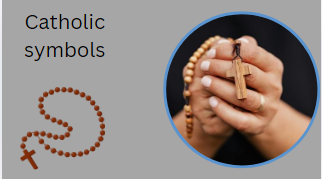
The rosary is both a prayer tool and a symbolic representation of devotion.
Structure
- Beads representing prayers
- Cross at the beginning
- Meditative cycles of Christ’s life
Meaning
- Prayerful connection to Mary
- Reflection on Jesus’ life
- Spiritual discipline
The rosary is one of the most important devotional practices in Catholicism.
Keys of Saint Peter – Authority of the Church
The keys symbolize the authority given by Jesus to Saint Peter the first Pope.
Meaning
- Authority of the Church
- Heaven’s gates
- Leadership of the papacy
These keys are also found on the flag of Vatican City.
They represent the spiritual leadership of the Catholic Church under the Pope.
The Lamb of God
The lamb is a symbol of Jesus Christ often called the “Lamb of God” in the Bible.
Meaning
- Innocence and sacrifice
- Christ’s role in salvation
- Purity and redemption
It is frequently used in liturgical art and Easter celebrations.
The Trinity Symbol
The Holy Trinity represents:
- The Father
- The Son
- The Holy Spirit
Common Symbols
- Triangle
- Three interlocking circles
- Clover (Shamrock used by St. Patrick)
Meaning
- Unity of God in three persons
- Mystery of Christian faith
- Divine perfection
Catholic Symbols in Modern Worship
Today Catholic symbols are widely used in:
- Church architecture
- Religious clothing
- Christian tattoos
- Digital media and websites
- Education and catechism
Even modern Catholics continue to use ancient symbols to express timeless faith.
The teachings of leaders like Pope Francis also emphasize compassion humility and the meaning behind these symbols in daily life.
Historical Development of Catholic Symbols
Catholic symbols developed over 2000 years of Christian history:
Early Christianity
- Secret symbols like fish and anchor
- Used during Roman persecution
Middle Ages
- Expansion of crucifix and saints’ imagery
- Gothic church symbolism
Renaissance Era
- Artistic development of sacred imagery
- More detailed religious paintings
Modern Era
- Global spread of Catholic symbolism
- Use in digital and media platforms
Role of Symbols in Catholic Art and Architecture
Catholic churches are filled with symbolic meaning:
- Stained glass windows tell Bible stories
- Altars represent the sacrifice of Christ
- Statues of saints inspire devotion
- Domes symbolize heaven
These artistic elements help believers connect spiritually during worship.
Why Catholic Symbols Are Still Important Today
Even in modern society Catholic symbols remain relevant because:
- They preserve religious identity
- They teach faith visually
- They connect generations of believers
- They support spiritual reflection
They also appear in global culture fashion and education.
Conclusion
Catholic symbols are powerful representations of faith history and spirituality within the Catholic Church. From the cross and crucifix to the dove and Sacred Heart each symbol carries deep meaning that continues to inspire millions of believers worldwide.
These symbols are not just artistic designs—they are spiritual tools that connect humanity with divine truth tradition and worship.
Whether displayed in churches worn as jewelry or studied in theology Catholic symbols remain an essential part of Christian identity and global religious heritage.