
What Does the Axis Mean in an Eye Prescription?
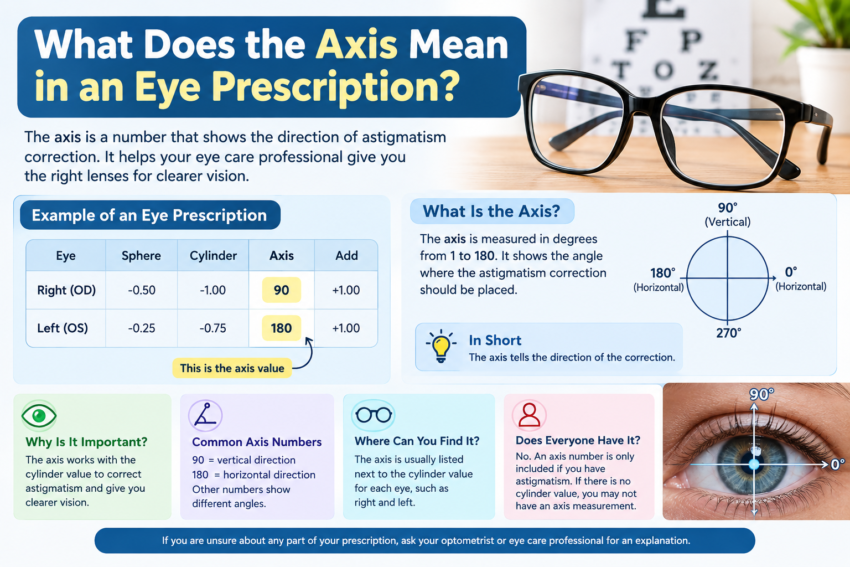
If you have looked at an eye prescription you may have seen a number called Axis. This number is usually found when a prescription includes a condition called astigmatism.
The axis helps show the direction where the astigmatism correction should be placed in your glasses or contact lenses.
What Is the Axis on an Eye Prescription?
The axis is a number that shows the angle of astigmatism correction. It is measured in degrees from 1 to 180.
For example a prescription may show:
Cylinder: -1.00
Axis: 90
In this example the axis tells the eye care professional the direction of the correction.
Why Is the Axis Important?
Astigmatism can make vision look blurry or distorted. The cylinder value shows the amount of correction needed. The axis shows the direction of that correction.
Both numbers work together to create the correct lens prescription.
Without the correct axis a person may not get the clearest vision from their glasses.
What Do Axis Numbers Mean?
Axis numbers are measured in degrees. A value of 90 represents a vertical direction. A value of 180 represents a horizontal direction.
Other numbers between 1 and 180 represent different angles.
The number itself does not mean that your eyesight is better or worse. It only describes the direction of the astigmatism correction.
Where Can You Find the Axis?
The axis is usually listed next to the cylinder value on an eye prescription. A prescription may have separate values for the right eye and the left eye.
For example:
Right Eye
Cylinder: -0.75
Axis: 90
Left Eye
Cylinder: -1.25
Axis: 180
Your prescription may use different numbers for each eye.
Does Everyone Have an Axis Number?
No. An axis value is generally included when astigmatism correction is needed.
If your prescription does not have a cylinder value then it may not include an axis measurement.
Final Thoughts
The axis on an eye prescription shows the direction of astigmatism correction. It is measured from 1 to 180 degrees and works together with the cylinder value.
If you are unsure about any part of your prescription it is best to ask your optometrist or eye care professional for an explanation.