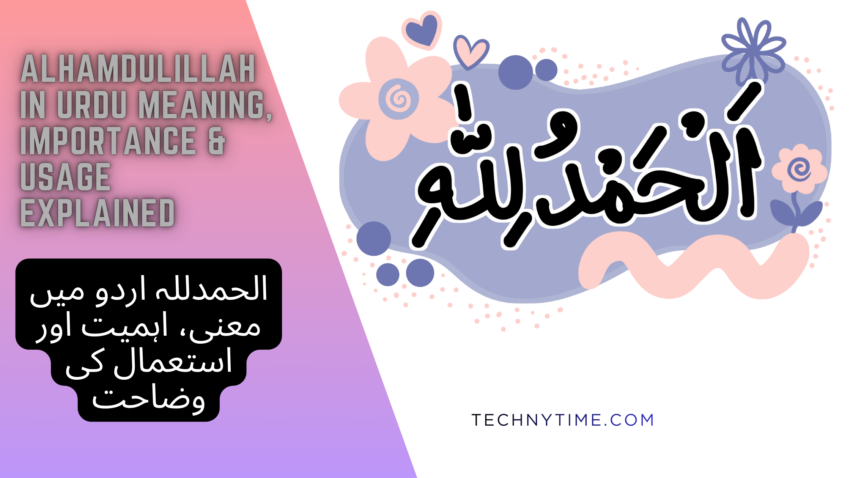
Alhamdulillah in Urdu — Meaning, Importance & Usage Explained
What Does “Alhamdulillah” Mean in Urdu?
Alhamdulillah (Arabic: ٱلْحَمْدُ لِلَّٰهِ) is an Islamic phrase meaning “Praise be to Allah” or “All praise is due to Allah.” In Urdu, it is written as الحمدللہ and translated as “تمام تعریفیں اللہ کے لیے ہیں” — which means all praise and thanks belong to Allah.
Literal Breakdown
- Al (ال) = The
- Hamd (حمد) = Praise
- Lillah (لِلَّٰهِ) = To Allah
So together, Al-hamdu lillāh means “All praise (Hamd) belongs to Allah.”
Alhamdulillah in Urdu Meaning
Why is Alhamdulillah Important in Islam?
-
Expression of Gratitude
Saying Alhamdulillah is a way to acknowledge Allah’s endless blessings — whether big or small. Muslims say it to show thankfulness for health, food, success, safety, and every blessing.
-
It’s a Part of Daily Life
This phrase is not just for formal prayers; Muslims use it in everyday conversations. For example:
- When someone asks “How are you?” the response might be:
“Alhamdulillah, theek hoon” (Praise be to Allah, I am fine).
-
It’s Mentioned in the Qur’an
The phrase appears in the Qur’an — most famously as part of Surah Al-Fatiha:
“Alhamdulillahi Rabbil-Alamin” — “All praise is due to Allah, Lord of all the worlds.”
When Should You Say Alhamdulillah? (Usage Examples)
Here are some common moments when Muslims say Alhamdulillah:
✔ After Completing a Task
Whether after eating, finishing work, or completing prayer — it’s a way of thanking Allah. (Baqarah Surah)
✔ Upon Receiving Good News
For example:
“Exam clear ho gaya — Alhamdulillah.” (The exam was cleared — Praise be to Allah.)
✔ Even During Hard Times
Muslims say Alhamdulillah to show trust in Allah’s plan and to accept trials with patience.
Benefits of Saying Alhamdulillah
-
Increases Gratitude
Regularly saying Alhamdulillah trains the heart to focus on blessings rather than worries.
-
Brings Peace & Contentment
Gratitude helps reduce stress and encourages inner peace.
-
Strengthens Faith
It connects your life to Allah — making faith a part of every moment throughout the day.
Alhamdulillah in Everyday Urdu & Culture
In Urdu-speaking communities, Alhamdulillah is more than a religious phrase — it’s a cultural expression:
- “اللہ کا شکر ہے” (Allah ka shukar hai) is another common way to say thank God in Urdu.
- People use this phrase after recovery from illness, success in studies, safe travels, and in greetings.
Frequently Asked Questions (FAQs)
Q: How is Alhamdulillah written in Urdu?
الحمدللہ — and it means تمام تعریفیں اللہ کے لیے ہیں.
Q: Is Alhamdulillah only for Muslims?
Although it is an Islamic expression, its meaning of gratitude and praise can be understood by anyone who values thankfulness.
Q: Should we say it only in Arabic?
Traditionally the phrase is kept in Arabic even in Urdu-speaking contexts, to keep its religious significance intact.
Conclusion
Alhamdulillah is more than a phrase — it’s a lifestyle of gratitude. Whether in Urdu, Arabic, or any language, it teaches Muslims to be thankful in every situation and strengthens their connection with Allah. Saying this phrase daily brings internal peace, a grateful heart, and a mindset that recognizes Allah in all moments of life.