
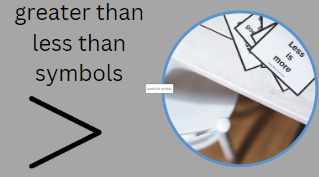
Greater Than Less Than Symbols: Complete Guide to Understanding Using and Typing Mathematical Comparison Signs
Learn everything about greater than less than symbols (> <) their meanings examples keyboard shortcuts mathematical applications inequalities coding uses and educational tips in this complete guide
Greater Than Less Than Symbols: Complete Guide
Introduction
Greater than and less than symbols are among the most fundamental mathematical symbols used worldwide These comparison signs help students teachers mathematicians engineers programmers and financial analysts compare values quickly and accurately
The two primary comparison symbols are:
- Greater Than Symbol: >
- Less Than Symbol: <
Although they appear simple these symbols play a critical role in mathematics algebra statistics computer science economics and everyday decision-making
This comprehensive guide explains the meaning history uses examples keyboard shortcuts educational techniques and practical applications of greater than and less than symbols
What Are Greater Than and Less Than Symbols?
Greater than and less than symbols are mathematical operators used to compare two numbers or quantities
Greater Than Symbol (>)
The greater than symbol indicates that the value on the left is larger than the value on the right
Example:
10 > 5
This statement reads:
Ten is greater than five
Less Than Symbol (<)
The less than symbol indicates that the value on the left is smaller than the value on the right
Example:
3 < 8
This statement reads:
Three is less than eight
These symbols help establish numerical relationships and form the foundation of mathematical inequalities
Understanding the Direction of the Symbols
A common way to remember the symbols is:
The open side always faces the larger number
Examples:
8 > 2
The open side faces 8 because 8 is larger
4 < 9
The open side faces 9 because 9 is larger
Another educational technique is the alligator method
Imagine the symbol as an alligator’s mouth
The alligator always wants to eat the larger number
Example:
12 > 7
The alligator opens toward 12 because 12 is larger
Greater Than Symbol (>) Explained
The greater than symbol shows superiority or larger value
Examples
15 > 10
100 > 50
9 > 2
250 > 125
1000 > 999
Real-Life Applications
Age Comparison
18 > 12
An 18-year-old is older than a 12-year-old
Money Comparison
$500 > $300
Five hundred dollars is more than three hundred dollars
Population Comparison
1 000 000 > 500 000
One million is greater than five hundred thousand
Less Than Symbol (<) Explained
The less than symbol shows a smaller value
Examples
4 < 10
25 < 30
99 < 100
50 < 1000
2 < 5
Real-Life Applications
Temperature
15°C < 25°C
15 degrees is cooler than 25 degrees
Product Pricing
$20 < $35
Twenty dollars costs less than thirty-five dollars
Distance
5 km < 10 km
Five kilometers is less than ten kilometers
Greater Than or Equal To Symbol (≥)
Sometimes values may be greater than or exactly equal to another value
The symbol used is:
≥
Example:
x ≥ 10
This means:
x is greater than or equal to 10
Possible values:
10 11 12 13 etc
Examples
50 ≥ 50
75 ≥ 50
100 ≥ 50
Less Than or Equal To Symbol (≤)
The symbol ≤ means less than or equal to
Example:
x ≤ 20
Possible values include:
20 19 18 17 etc
Examples
10 ≤ 20
20 ≤ 20
5 ≤ 20
Equal To Symbol (=)
The equal sign indicates that two quantities are exactly the same
Examples:
5 = 5
100 = 100
25 + 25 = 50
Not Equal To Symbol (≠)
The not equal symbol indicates that two quantities are different
Examples:
5 ≠ 7
10 ≠ 20
50 ≠ 100
This symbol is frequently used in mathematics and programming
Greater Than and Less Than in Algebra
Algebra often uses inequalities instead of equations
Example 1
x > 10
The variable x can be:
11 12 13 14 etc
Example 2
y < 5
The variable y can be:
4 3 2 1 0 and negative numbers
Example 3
a ≥ 7
Possible values:
7 8 9 10 etc
Example 4
b ≤ 20
Possible values:
20 19 18 etc
Greater Than Less Than Symbols in Number Lines
Number lines help visualize inequalities
Greater Than
x > 3
Place an open circle at 3 and shade everything to the right
Less Than
x < 7
Place an open circle at 7 and shade everything to the left
Greater Than or Equal To
x ≥ 5
Use a closed circle at 5 and shade right
Less Than or Equal To
x ≤ 10
Use a closed circle at 10 and shade left
Applications in Statistics
Statistics relies heavily on comparison operators
Examples include:
- Probability calculations
- Data analysis
- Confidence intervals
- Hypothesis testing
Example:
P(X > 10)
This means the probability that X is greater than 10
Applications in Computer Programming
Programming languages use greater than and less than symbols constantly
JavaScript Example
if (age > 18) {
console log( Adult );
}
Python Example
if score < 50:
print( Fail )
Common Programming Operators
Greater than
- < Less than
= Greater than or equal to
- <= Less than or equal to
- == Equal to
- != Not equal to
These operators drive logic and decision-making in software applications
Greater Than Less Than Symbols in Excel
Microsoft Excel uses comparison operators for formulas and data analysis
Examples:
=A1>B1
Returns TRUE if A1 is larger
=A1<B1
Returns TRUE if A1 is smaller
=A1>=B1
Checks for greater than or equal to
Excel users frequently use these symbols in:
- Conditional formatting
- Financial reports
- Data validation
- Business analytics
Use in Economics and Finance
Financial analysts compare values daily
Examples:
Revenue > Expenses
Profit > Loss
Assets > Liabilities
These comparisons help evaluate financial health and performance
Use in Science
Scientists use inequalities in measurements and experiments
Examples:
Temperature > 100°C
Pressure < 50 psi
Mass ≥ 10 kg
Scientific calculations often depend on accurate comparisons
Keyboard Shortcuts for Greater Than and Less Than Symbols
Windows and Mac
Greater Than:
Press Shift +
Less Than:
<
Press Shift +
HTML Codes
Greater Than:
>
Less Than:
<
Unicode Values
Greater Than:
U+003E
Less Than:
U+003C
Greater Than or Equal To:
U+2265
Less Than or Equal To:
U+2264
Copy and Paste Greater Than Less Than Symbols
Basic Symbols
<
≠
Extended Comparison Symbols
≥
≤
≫
≪
These symbols can be copied and pasted into documents emails websites and social media posts
Common Student Mistakes
Mistake 1: Reversing Symbols
Incorrect:
5 > 10
Correct:
5 < 10
Mistake 2: Forgetting the Open Side Faces Larger Number
Always remember:
The open end points toward the bigger value
Mistake 3: Confusing ≥ and >
Greater than:
Greater than or equal to:
≥
The second symbol includes equality
Teaching Strategies for Children
The Alligator Method
The symbol becomes an alligator mouth
The alligator always eats the larger number
Example:
8 > 3
The alligator eats 8
Number Line Visualization
Using number lines helps students understand value relationships
Real-Life Comparisons
Compare:
- Ages
- Heights
- Prices
- Scores
Children learn faster when concepts connect to daily experiences
History of Greater Than and Less Than Symbols
The symbols were introduced by English mathematician
Thomas Harriot
in the 17th century
Harriot published these comparison symbols in his mathematical work helping standardize mathematical notation
Today they are recognized universally across education science technology and commerce
Why Greater Than Less Than Symbols Matter
These symbols help us:
- Compare quantities
- Solve equations
- Analyze data
- Write computer programs
- Understand financial reports
- Conduct scientific research
- Learn mathematics effectively
Without comparison operators modern mathematics and computing would be significantly more difficult
Frequently Asked Questions
What is the greater than symbol?
The greater than symbol (>) indicates that the value on the left is larger than the value on the right
What is the less than symbol?
The less than symbol (<) indicates that the value on the left is smaller than the value on the right
How do I remember the symbols?
Remember that the open side always faces the larger number
What does ≥ mean?
Greater than or equal to
What does ≤ mean?
Less than or equal to
Are these symbols used in programming?
Yes They are essential comparison operators in virtually every programming language
Can I copy and paste these symbols?
Yes:
< ≥ ≤ ≠
can be copied directly into documents and websites
Conclusion
Greater than and less than symbols are foundational mathematical tools used to compare numbers quantities variables and data From elementary school mathematics to advanced algebra statistics computer programming finance economics and scientific research these symbols provide a universal language for comparison
Understanding how to use > < ≥ ≤ and ≠ correctly improves mathematical literacy problem-solving abilities and analytical thinking Whether you’re a student learning inequalities a programmer writing conditional statements or a business analyst evaluating data mastering greater than less than symbols is an essential skill that applies across countless disciplines
By learning the meanings applications shortcuts and common mistakes associated with these symbols you gain a stronger foundation for success in mathematics and beyond