
Potassium Symbol: Meaning History Uses and Scientific Significance
Learn everything about the potassium symbol its origin meaning atomic properties uses periodic table position and importance in chemistry biology medicine and industry.
Potassium Symbol: Complete Guide to the Chemical Symbol K
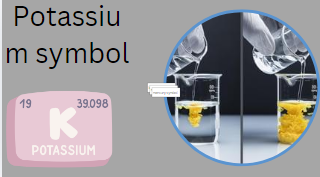
The potassium symbol is K one of the most recognized symbols in the periodic table. Potassium is an essential chemical element that plays a crucial role in human health plant growth industrial manufacturing and scientific research. While many people expect potassium’s symbol to be “P” based on its English name the actual symbol “K” comes from its historical Latin name.
Understanding the potassium symbol helps students researchers healthcare professionals and science enthusiasts better understand chemistry and the organization of the periodic table.
In this detailed guide we will explore the meaning of the potassium symbol its history atomic structure properties uses biological importance and frequently asked questions.
What Is the Potassium Symbol?
The chemical symbol for potassium is:
K
Potassium is represented by the single-letter symbol K in the periodic table.
Basic Information
| Property | Value |
| Element Name | Potassium |
| Symbol | K |
| Atomic Number | 19 |
| Atomic Mass | 39.0983 u |
| Group | 1 (Alkali Metals) |
| Period | 4 |
| Block | s-block |
| Electron Configuration | [Ar] 4s¹ |
| State at Room Temperature | Solid |
The potassium symbol K is used universally in chemistry medicine biology agriculture and industrial applications.
Why Is the Potassium Symbol K?
One of the most common questions in chemistry is:
Why is potassium represented by K instead of P?
The answer lies in history.
The symbol K comes from the Latin word:
Kalium
The name Kalium originated from the Arabic word:
Al-Qalyah
which refers to plant ashes used historically to obtain potassium compounds.
When modern chemical symbols were standardized during the 19th century scientists chose K from Kalium rather than using P which was already assigned to phosphorus.
History of Potassium
Potassium has a fascinating scientific history.
Discovery
Potassium was discovered in 1807 by:
Humphry Davy
Davy isolated potassium through electrolysis of molten potassium hydroxide.
This achievement made potassium:
- The first metal isolated using electrolysis
- One of the earliest elements discovered through modern chemical techniques
The discovery significantly advanced the field of chemistry and helped scientists understand atomic structure.
Position of Potassium in the Periodic Table
Potassium occupies an important place in the periodic table.
Periodic Table Information
| Category | Details |
| Atomic Number | 19 |
| Symbol | K |
| Element Name | Potassium |
| Group | 1 |
| Period | 4 |
| Family | Alkali Metals |
Potassium belongs to the alkali metal family which includes:
- Lithium (Li)
- Sodium (Na)
- Potassium (K)
- Rubidium (Rb)
- Cesium (Cs)
- Francium (Fr)
These elements are highly reactive and readily lose one electron.
Atomic Structure of Potassium
Understanding the potassium symbol requires understanding its atomic structure.
Protons
Potassium contains:
19 protons
The number of protons defines potassium as element 19.
Electrons
A neutral potassium atom contains:
19 electrons
Electron arrangement:
2 8 8 1
The single outer electron makes potassium highly reactive.
Neutrons
The most common isotope contains:
20 neutrons
Potassium Electron Configuration
The electron configuration of potassium is:
[Ar] 4s¹
Expanded form:
1s² 2s² 2p⁶ 3s² 3p⁶ 4s¹
This configuration explains why potassium:
- Easily loses one electron
- Forms K⁺ ions
- Reacts vigorously with water
Physical Properties of Potassium
Potassium possesses several unique physical properties.
Appearance
Potassium is:
- Soft
- Silvery-white
- Metallic
Density
Density:
0.862 g/cm³
Potassium is less dense than water.
Melting Point
Melting point:
63.5°C (146.3°F)
Boiling Point
Boiling point:
759°C (1398°F)
Chemical Properties of Potassium
Potassium is one of the most reactive metals.
Reaction with Water
Potassium reacts violently with water:
2K + 2H₂O → 2KOH + H₂
The reaction produces:
- Potassium hydroxide
- Hydrogen gas
- Heat
Reaction with Oxygen
Potassium rapidly reacts with oxygen in air forming oxides and superoxides.
This is why potassium must be stored under oil.
Common Potassium Compounds
The potassium symbol K appears in numerous chemical compounds.
Potassium Chloride (KCl)
Uses:
- Fertilizers
- Medical treatments
- Salt substitutes
Potassium Hydroxide (KOH)
Uses:
- Soap production
- Batteries
- Industrial cleaning
Potassium Nitrate (KNO₃)
Uses:
- Fertilizers
- Food preservation
- Fireworks
Potassium Sulfate (K₂SO₄)
Uses:
- Agriculture
- Soil enrichment
Potassium Permanganate (KMnO₄)
Uses:
- Water treatment
- Disinfectants
- Laboratory chemistry
Importance of Potassium in the Human Body
Potassium is an essential mineral and electrolyte.
Functions in the Body
Potassium helps regulate:
- Muscle contractions
- Nerve signaling
- Fluid balance
- Heart rhythm
- Blood pressure
Without sufficient potassium the body cannot function properly.
Foods Rich in Potassium
Many foods contain potassium.
Fruits
- Bananas
- Oranges
- Avocados
- Apricots
- Kiwis
Vegetables
- Potatoes
- Spinach
- Sweet potatoes
- Tomatoes
- Broccoli
Other Sources
- Beans
- Yogurt
- Fish
- Nuts
The potassium symbol K often appears on nutrition labels and medical reports.
Potassium Deficiency
Potassium deficiency is called:
Hypokalemia
Symptoms include:
- Muscle weakness
- Fatigue
- Heart rhythm abnormalities
- Cramps
- Constipation
Causes include:
- Excessive sweating
- Diarrhea
- Certain medications
- Poor nutrition
Excess Potassium
High potassium levels are known as:
Hyperkalemia
Symptoms include:
- Irregular heartbeat
- Muscle weakness
- Nausea
- Chest pain
Severe hyperkalemia can become life-threatening.
Potassium Symbol in Medicine
The symbol K is commonly used in medicine.
Examples:
- Serum K levels
- K supplementation
- K deficiency testing
- K electrolyte monitoring
Normal blood potassium levels generally range from:
3.5–5.0 mEq/L
Healthcare providers frequently use the symbol K in laboratory reports.
Potassium Symbol in Agriculture
Potassium is one of the three major nutrients in fertilizers.
The fertilizer ratio:
N-P-K
stands for:
| Letter | Nutrient |
| N | Nitrogen |
| P | Phosphorus |
| K | Potassium |
Notice that potassium is represented by K not P.
Potassium improves:
- Root growth
- Disease resistance
- Water regulation
- Crop quality
1 Potassium Symbol in Industry
2 Potassium compounds are widely used in industry.
Applications
Glass Manufacturing
Potassium compounds improve glass strength.
Soap Production
Potassium hydroxide produces soft soaps.
Batteries
Potassium-based electrolytes improve battery performance.
Food Industry
Potassium salts are used as preservatives and salt alternatives.
Chemical Production
1 Potassium serves as a raw material in numerous industrial processes.
2 Potassium Isotopes
3 Potassium exists in multiple isotopic forms.
Potassium-39
Most abundant isotope.
Potassium-40
Radioactive isotope used in:
- Geological dating
- Archaeological studies
Potassium-41
Stable isotope.
Potassium-40 plays a major role in determining the age of rocks and minerals.
Potassium Symbol in Chemistry Equations
Examples include:
Potassium Chloride
KCl
Potassium Hydroxide
KOH
Potassium Carbonate
K₂CO₃
Potassium Sulfate
K₂SO₄
Potassium Nitrate
KNO₃
The symbol K always represents potassium in chemical formulas.
Interesting Facts About Potassium
- Potassium Is Essential for Life
Every living organism requires potassium.
- Potassium Burns with a Purple Flame
When heated potassium produces a beautiful lilac-purple flame.
- Potassium Floats on Water
Because of its low density potassium floats before reacting.
- Potassium Is Highly Reactive
Pure potassium cannot be stored in open air.
- Potassium Exists in Bananas
Although bananas are famous for potassium many foods contain even higher amounts.
Potassium vs Sodium
Potassium and sodium share many similarities.
| Property | Potassium | Sodium |
| Symbol | K | Na |
| Atomic Number | 19 | 11 |
| Group | 1 | 1 |
| Reactivity | Very High | High |
| Biological Role | Essential | Essential |
Both elements are crucial electrolytes in the human body.
How to Remember the Potassium Symbol
Students often struggle to remember why potassium uses K.
Helpful memory trick:
Potassium = Kalium = K
Associating potassium with its Latin name makes the symbol easier to remember.
Frequently Asked Questions
What is the symbol of potassium?
The symbol of potassium is K.
Why is potassium called K?
The symbol comes from the Latin name Kalium.
What is the atomic number of potassium?
Potassium has an atomic number of 19.
Is potassium a metal?
Yes. Potassium is an alkali metal.
What group is potassium in?
Potassium belongs to Group 1 of the periodic table.
What does K mean in fertilizers?
K represents potassium in N-P-K fertilizer ratings.
Who discovered potassium?
Potassium was discovered by Humphry Davy in 1807.
Conclusion
The potassium symbol (K) is far more than a simple letter on the periodic table. Derived from the Latin word Kalium the symbol reflects the rich history of chemistry and scientific discovery. Potassium is a vital alkali metal with an atomic number of 19 and plays indispensable roles in biology medicine agriculture industry and environmental science.
From regulating heart function and nerve signals in the human body to improving crop yields through fertilizers potassium remains one of the most important elements on Earth. Understanding the potassium symbol its origin properties compounds and applications provides a strong foundation for learning chemistry and appreciating the role of essential elements in everyday life.
Focus Keyword: Potassium Symbol
SEO Keywords: potassiums symbol symbol for potassiums potassiums chemical symbol K symbol potassiums periodic table potassiums atomic number potassiums element symbol potassiums formula potassiums compounds potassiums uses potassiums in fertilizers potassiums chemistry potassiums metal why is potassium symbol K potassiums element K.