
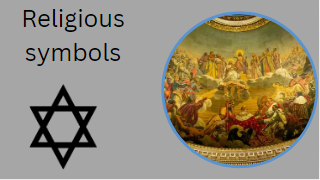
Religious Symbols: Meanings History Types and Significance Around the World
Religious symbols have played a central role in human civilization for thousands of years. They represent faith spirituality cultural identity divine beliefs sacred teachings and religious traditions. From the Christian Cross to the Islamic Crescent Moon the Hindu Om and the Buddhist Dharma Wheel religious symbols help believers express their devotion and connect with their spiritual heritage.
In today’s interconnected world religious symbols are recognized globally and continue to influence art architecture literature philosophy and social practices. Understanding these sacred emblems provides valuable insight into the beliefs and values of different religions.
This guide explores the history meanings significance and types of religious symbols across major world religions.
What Are Religious Symbols?
Religious symbols are visual representations that communicate spiritual concepts beliefs traditions and sacred teachings. They often serve as reminders of faith divine power moral values and religious identity.
These symbols can appear in:
- Places of worship
- Religious texts
- Jewelry
- Clothing
- Architecture
- Flags
- Ceremonies
- Sacred artifacts
Religious symbols often carry deep spiritual meanings that go beyond their physical appearance.
Why Are Religious Symbols Important?
Religious symbols serve multiple purposes:
Spiritual Connection
Symbols help believers feel connected to God gods ancestors or spiritual forces.
Religious Identity
They identify members of a faith community and reinforce shared beliefs.
Teaching Tool
Many symbols communicate complex religious ideas through simple visual forms.
Cultural Heritage
Religious symbols preserve traditions and historical values passed down through generations.
Worship and Ritual
Many symbols play important roles in prayers ceremonies meditation and sacred practices.
History of Religious Symbols
The use of religious symbolism dates back to prehistoric civilizations. Ancient humans used carvings paintings and sacred objects to represent supernatural powers and spiritual beliefs.
Early examples include:
- Cave paintings
- Sun symbols
- Moon symbols
- Animal totems
- Sacred geometric patterns
As civilizations developed organized religions created more formal symbolic systems.
Ancient societies such as:
- Egypt
- Mesopotamia
- Greece
- Rome
- India
- China
all used religious imagery to represent divine beings and cosmic principles.
Over time these symbols became central to religious traditions worldwide.
Major Religious Symbols Around the World
The Christian Cross
✝
The Cross is the most recognized Christian symbol.
It represents:
- The crucifixion of Jesus Christ
- Salvation
- Sacrifice
- Resurrection
- Eternal life
Christians wear crosses as jewelry display them in churches and use them in religious ceremonies.
Variations of the Cross
- Latin Cross
- Greek Cross
- Celtic Cross
- Orthodox Cross
- Crucifix
Each version carries unique theological and historical significance.
The Islamic Crescent and Star
☪
The Crescent Moon and Star are widely associated with Islam.
Symbolic meanings include:
- Divine guidance
- Faith
- Spiritual illumination
- Islamic heritage
Although not mentioned directly in the Quran the symbol became prominent through historical Islamic empires especially the Ottoman Empire.
Today it appears on:
- Mosques
- Islamic flags
- Religious publications
The Hindu Om Symbol
🕉
Om (Aum) is one of Hinduism’s most sacred symbols.
It represents:
- Ultimate reality
- Universal consciousness
- Creation
- Preservation
- Destruction
According to Hindu philosophy Om is considered the primordial sound of the universe.
The symbol appears in:
- Temples
- Meditation spaces
- Religious texts
- Yoga practices
The Buddhist Dharma Wheel
☸
The Dharma Wheel also known as the Wheel of Dharma symbolizes Buddhist teachings.
The wheel’s components represent:
- The Noble Eightfold Path
- Enlightenment
- Wisdom
- Spiritual progress
The eight spokes correspond to:
- Right View
- Right Intention
- Right Speech
- Right Action
- Right Livelihood
- Right Effort
- Right Mindfulness
- Right Concentration
It remains one of Buddhism’s most important symbols.
The Star of David
✡
The Star of David is the primary symbol of Judaism.
It consists of two overlapping triangles.
It symbolizes:
- Divine protection
- Jewish identity
- Connection between God and humanity
The symbol appears on:
- Synagogues
- Religious artifacts
- The flag of Israel
It has become one of the most recognizable Jewish emblems worldwide.
The Sikh Khanda
☬
The Khanda is the central symbol of Sikhism.
It contains:
- A double-edged sword
- A circular chakra
- Two curved swords
The Khanda represents:
- Divine knowledge
- Unity
- Justice
- Spiritual authority
It serves as a powerful representation of Sikh beliefs and values.
The Jain Symbol
The Jain symbol combines several sacred elements.
These include:
- Ahimsa (non-violence)
- Spiritual liberation
- Cosmic order
A raised hand with a wheel symbolizes peace and the commitment to avoid harming living beings.
The symbol reflects core Jain teachings regarding compassion and self-discipline.
The Yin-Yang Symbol
☯
Although often associated with Chinese philosophy and Taoism Yin-Yang carries deep spiritual significance.
It represents:
- Balance
- Harmony
- Duality
- Interconnectedness
Examples include:
- Light and dark
- Male and female
- Earth and heaven
The symbol teaches that opposing forces work together to create harmony.
Ancient Religious Symbols
Ankh
☥
The Ankh originated in Ancient Egypt.
It symbolizes:
- Life
- Immortality
- Divine power
Egyptian gods and pharaohs are often depicted holding the Ankh.
Eye of Horus
The Eye of Horus represents:
- Protection
- Healing
- Royal authority
It remains a popular spiritual and protective symbol today.
Sun Symbol
Many ancient religions worshipped solar deities.
The Sun symbol often represented:
- Creation
- Energy
- Life
- Divine power
Tree of Life
The Tree of Life appears in numerous religious traditions.
It symbolizes:
- Growth
- Wisdom
- Interconnectedness
- Eternal life
Sacred Symbols in Indigenous Religions
Many indigenous cultures use sacred symbols connected to nature.
Examples include:
Totem Poles
Represent:
- Ancestral lineage
- Spiritual guardians
- Tribal identity
Medicine Wheel
Found in Native American traditions.
Represents:
- Harmony
- Nature
- Spiritual balance
- Life cycles
Animal Symbols
Animals often symbolize:
- Wisdom
- Strength
- Protection
- Spiritual guidance
Religious Symbols and Sacred Geometry
Many religious traditions incorporate sacred geometry.
Common geometric symbols include:
Circle
Represents:
- Eternity
- Unity
- Perfection
Triangle
Represents:
- Trinity
- Divine balance
- Spiritual harmony
Mandala
Used in Hindu and Buddhist traditions.
Represents:
- The universe
- Meditation
- Cosmic order
Hexagram
Appears in various spiritual traditions and symbolizes divine-human connection.
Religious Symbols in Architecture
Religious architecture often incorporates sacred symbols.
Examples include:
Churches
Feature:
- Crosses
- Stained glass imagery
- Biblical symbolism
Mosques
Feature:
- Crescents
- Geometric patterns
- Arabic calligraphy
Temples
Include:
- Om symbols
- Sacred statues
- Mandalas
Synagogues
Display:
- Star of David
- Menorah
- Hebrew inscriptions
Religious Symbols in Modern Society
Religious symbols remain highly relevant today.
They appear in:
- Jewelry
- Tattoos
- Fashion
- Social media
- Public monuments
- Educational institutions
Many people wear religious symbols as expressions of faith culture and personal identity.
Common Religious Symbols and Their Meanings
| Symbol | Religion | Meaning |
| Cross | Christianity | Salvation and resurrection |
| Crescent Moon | Islam | Faith and guidance |
| Om | Hinduism | Universal consciousness |
| Dharma Wheel | Buddhism | Enlightenment |
| Star of David | Judaism | Jewish identity |
| Khanda | Sikhism | Unity and divine justice |
| Jain Symbol | Jainism | Non-violence |
| Yin-Yang | Taoism | Balance and harmony |
| Ankh | Ancient Egypt | Eternal life |
| Tree of Life | Multiple Religions | Growth and interconnectedness |
How Religious Symbols Promote Unity
Despite differences among religions many symbols express common themes:
- Love
- Compassion
- Peace
- Wisdom
- Justice
- Hope
- Spiritual growth
Studying religious symbols can encourage interfaith understanding and respect among diverse communities.
Religious Symbols in Education
Educational institutions use religious symbols to teach:
- World religions
- Cultural studies
- History
- Philosophy
- Anthropology
Learning about these symbols helps students appreciate cultural diversity and global traditions.
Digital Use of Religious Symbols
Today religious symbols are widely used online through:
- Emojis
- Websites
- Educational content
- Religious apps
- Social media profiles
Unicode has enabled many sacred symbols to be represented digitally making them accessible worldwide.
Frequently Asked Questions (FAQs)
What is the most recognized religious symbol?
The Christian Cross is generally considered the most recognized religious symbol globally.
What does the Om symbol mean?
Om represents the universal sound and ultimate reality in Hindu philosophy.
Is the Crescent Moon an official Islamic symbol?
While not mandated by Islamic scripture the Crescent Moon became a widely recognized symbol through historical Islamic traditions.
What does the Star of David represent?
The Star of David symbolizes Jewish identity faith and divine protection.
Why are religious symbols important?
They help express faith preserve traditions teach spiritual concepts and strengthen religious identity.
What is sacred geometry in religion?
Sacred geometry involves symbolic geometric patterns believed to reflect divine order and spiritual truths.
Conclusion
Religious symbols are among humanity’s most powerful forms of spiritual expression. Whether it is the Cross of Christianity the Crescent Moon of Islam the Om of Hinduism the Dharma Wheel of Buddhism the Star of David of Judaism or the Khanda of Sikhism each symbol carries profound meanings that connect believers with their faith and traditions.
These sacred emblems transcend language barriers and continue to inspire billions of people worldwide. By understanding religious symbols we gain deeper insight into history spirituality culture and the shared human search for meaning.
As societies become increasingly interconnected knowledge of religious symbols promotes respect tolerance and appreciation for the diverse beliefs that shape our world.
SEO Keywords Included: religious symbols sacred symbols world religion symbols Christian cross Islamic crescent moon Om symbol Dharma wheel Star of David Khanda symbol Jain symbol sacred geometry spiritual symbols religious iconography symbols of faith ancient religious symbols religious meanings holy symbols faith symbols religion signs sacred emblems.