
Wash Label Symbol Meanings: The Complete Guide to Laundry Care Symbols
Learn wash label symbol meanings with this complete guide. Understand washing drying bleaching ironing and dry-cleaning symbols to keep clothes looking new and avoid laundry mistakes.
Wash Label Symbol Meanings: Understanding Every Laundry Care Symbol
Have you ever looked at a clothing tag and wondered what those tiny symbols actually mean? Understanding wash label symbol meanings is essential for maintaining the quality color shape and lifespan of your garments. These symbols provide important instructions about washing drying ironing bleaching and dry cleaning.
Whether you’re caring for cotton shirts delicate silk blouses wool sweaters or synthetic fabrics learning laundry care symbols can help prevent shrinkage fading stretching and fabric damage.
In this comprehensive guide you’ll discover the meaning of every common wash label symbol why they matter and how to follow clothing care instructions correctly.
What Are Wash Label Symbols?
Wash label symbols are standardized pictograms found on clothing tags and textile products. They provide specific care instructions that help consumers clean and maintain garments safely.
These symbols are used worldwide and are based on international textile care standards. Rather than relying on written instructions in multiple languages manufacturers use symbols that can be understood universally.
The five major categories include:
- Washing symbols
- Bleaching symbols
- Drying symbols
- Ironing symbols
- Professional cleaning symbols
Each category contains variations that indicate temperature settings cleaning methods and restrictions.
Why Understanding Wash Label Symbols Matters
Ignoring wash care labels can result in:
- Shrunk clothing
- Color bleeding
- Fabric damage
- Loss of elasticity
- Wrinkling
- Misshapen garments
- Reduced lifespan of clothes
By following the correct care instructions you can:
- Save money on replacing clothes
- Preserve fabric quality
- Maintain garment fit
- Reduce environmental waste
- Improve laundry efficiency
Washing Symbols and Their Meanings
The washing symbol looks like a small bucket or tub filled with water.
Basic Wash Symbol
A plain wash tub means:
Machine wash is allowed.
The garment can be washed in a standard washing machine.
Wash Tub with Number
Numbers indicate the maximum washing temperature.
Wash at 30°C
Suitable for:
- Delicate fabrics
- Synthetic materials
- Colored garments
Benefits:
- Reduces fading
- Prevents shrinking
- Saves energy
Wash at 40°C
Ideal for:
- Cotton blends
- Everyday clothing
- T-shirts
- Casual wear
Wash at 50°C
Suitable for moderately soiled clothing.
Wash at 60°C
Recommended for:
- Towels
- Bedding
- White cotton fabrics
Wash at 90°C
Used for:
- Heavy-duty cotton
- Sanitizing linens
- Medical textiles
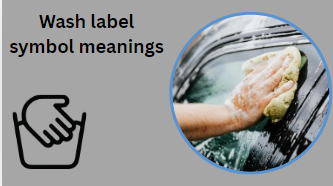
Hand Wash Symbol
A hand inside a wash tub means:
Hand wash only.
These garments require gentle handling and should not be machine washed.
Common fabrics include:
- Silk
- Lace
- Cashmere
- Delicate wool
Do Not Wash Symbol
A crossed-out wash tub indicates:
Do not wash.
The garment requires professional dry cleaning or special treatment.
Gentle Cycle Symbol
A wash tub with one line underneath means:
Permanent press or gentle cycle.
Suitable for:
- Synthetic fabrics
- Wrinkle-resistant clothing
Very Gentle Cycle Symbol
A wash tub with two lines underneath means:
Extra delicate wash cycle.
Used for:
- Fine fabrics
- Delicate garments
- Lightweight materials
Bleaching Symbols and Their Meanings
Bleach symbols are represented by a triangle.
Empty Triangle
Meaning:
Bleaching is allowed.
You may use bleach according to product instructions.
Triangle with Two Diagonal Lines
Meaning:
Only non-chlorine bleach may be used.
Suitable alternatives include:
- Oxygen bleach
- Color-safe bleach
Crossed-Out Triangle
Meaning:
Do not bleach.
Bleaching may damage:
- Fabric fibers
- Colors
- Garment structure
Drying Symbols and Their Meanings
Drying symbols are represented by a square.
Proper drying is essential because many garments are damaged during the drying process rather than washing.
Tumble Dry Symbols
A square containing a circle indicates tumble drying.
Basic Tumble Dry Symbol
Meaning:
Tumble drying is permitted.
Tumble Dry Low Heat
One dot inside the circle means:
Low heat setting.
Recommended for:
- Delicates
- Polyester
- Spandex blends
Tumble Dry Medium Heat
Two dots indicate:
Medium heat.
Suitable for:
- Most everyday clothing
- Cotton blends
Tumble Dry High Heat
Three dots mean:
High heat permitted.
Common for:
- Towels
- Bedding
- Durable cotton items
Do Not Tumble Dry
A crossed-out tumble dry symbol means:
Avoid machine drying.
Use air drying instead.
Natural Drying Symbols
These symbols indicate air-drying methods.
Line Dry Symbol
A square with a vertical line means:
Hang to dry.
Suitable for:
- Shirts
- Dresses
- Lightweight garments
Drip Dry Symbol
Three vertical lines indicate:
Drip dry without wringing.
Water should naturally drain from the garment.
Dry Flat Symbol
A horizontal line inside a square means:
Lay flat to dry.
Ideal for:
- Wool sweaters
- Knitwear
- Delicate fabrics
Dry in Shade Symbol
A shaded corner indicates:
Keep away from direct sunlight while drying.
Helps prevent:
- Fading
- Fabric weakening
- Color damage
Ironing Symbols and Their Meanings
Iron symbols resemble a traditional clothing iron.
These symbols specify safe ironing temperatures.
Basic Iron Symbol
Meaning:
Ironing allowed.
Low Temperature Iron
One dot means:
Maximum temperature 110°C (230°F).
Suitable for:
- Nylon
- Acrylic
- Acetate
Medium Temperature Iron
Two dots indicate:
Maximum temperature 150°C (300°F).
Suitable for:
- Polyester
- Wool
- Blends
High Temperature Iron
Three dots mean:
Maximum temperature 200°C (390°F).
Suitable for:
- Cotton
- Linen
Do Not Iron Symbol
Crossed-out iron symbol means:
Ironing prohibited.
Heat may damage the material.
No Steam Symbol
An iron with crossed-out steam lines means:
Do not use steam.
Common for sensitive fabrics.
Dry Cleaning Symbols and Their Meanings
Professional cleaning symbols are shown as circles.
These instructions help dry cleaners choose appropriate cleaning methods.
Empty Circle
Meaning:
Dry cleaning permitted.
Circle with Letter A
Meaning:
Any solvent may be used.
Circle with Letter P
Meaning:
Specific dry-cleaning solvents are recommended.
Circle with Letter F
Meaning:
Only petroleum-based solvents should be used.
Crossed-Out Circle
Meaning:
Do not dry clean.
Professional dry cleaning could damage the garment.
Common Fabric Care Symbols by Material
Cotton
Usually allows:
- Machine washing
- Medium or high heat ironing
- Tumble drying
Wool
Often requires:
- Gentle washing
- Low temperatures
- Flat drying
Silk
Generally requires:
- Hand washing
- Low heat ironing
- Air drying
Linen
Typically allows:
- Machine washing
- High-temperature ironing
Polyester
Usually needs:
- Low to medium heat
- Gentle cycles
Rayon
Requires extra care because it can shrink and lose shape easily.
International Wash Label Standards
Several organizations regulate garment care symbols.
GINETEX
The International Association for Textile Care Labelling manages many globally recognized symbols.
ISO Textile Standards
The International Organization for Standardization provides guidelines for textile care labeling.
ASTM Standards
Widely used in North America for garment care instructions.
These standards help ensure consistency worldwide.
Most Common Laundry Mistakes
Understanding wash label symbol meanings helps avoid common errors.
Washing Hot Instead of Cold
Can cause:
- Shrinkage
- Fading
- Fiber damage
Using Bleach Incorrectly
May result in:
- Color loss
- Fabric weakening
Overdrying Clothes
Can:
- Damage fibers
- Increase wrinkles
- Cause shrinkage
Ignoring Delicate Settings
May stretch or tear sensitive fabrics.
Ironing at Excessive Temperatures
Can melt synthetic materials and leave permanent marks.
Eco-Friendly Laundry Tips
Following care labels can also reduce environmental impact.
Wash in Cold Water
Benefits:
- Saves energy
- Preserves fabric quality
Air Dry When Possible
Reduces electricity consumption.
Use Gentle Detergents
Helps maintain fabric integrity.
Wash Full Loads
Improves water and energy efficiency.
Follow Recommended Temperatures
Avoids unnecessary energy use.
Quick Reference Chart
| Symbol Type | Meaning |
| Wash Tub | Machine wash |
| Hand in Tub | Hand wash only |
| Crossed Tub | Do not wash |
| Triangle | Bleaching allowed |
| Crossed Triangle | Do not bleach |
| Square with Circle | Tumble dry |
| Crossed Tumble Dry | Do not tumble dry |
| Iron | Iron allowed |
| Crossed Iron | Do not iron |
| Circle | Dry clean |
| Crossed Circle | Do not dry clean |
Frequently Asked Questions
What do the symbols on clothing labels mean?
They provide instructions for washing drying ironing bleaching and professional cleaning.
What does a crossed-out wash tub mean?
It means the garment should not be washed with water.
What does the triangle symbol represent?
The triangle refers to bleaching instructions.
What does one dot inside an iron mean?
Use a low ironing temperature.
Why are wash care labels important?
They help maintain garment quality and extend clothing lifespan.
Can I remove wash labels?
You can remove them after understanding and recording the instructions but keeping them is recommended for future reference.
Conclusion
Understanding wash label symbol meanings is one of the easiest ways to protect your clothing investment. These small symbols provide critical instructions about washing bleaching drying ironing and professional cleaning. Following them correctly helps prevent shrinking fading stretching and fabric damage while extending the life of your garments.
Whether you’re caring for cotton shirts wool sweaters silk dresses linen garments or synthetic fabrics learning laundry care symbols ensures that every item receives the proper treatment. The next time you check a clothing tag you’ll know exactly what each symbol means and how to keep your clothes looking their best for years to come.